

Winkelwagen
U heeft geen artikelen in uw winkelwagen
There’s no need to break your budget for a self-tanning lotion. Your local drugstores, big-box stores, and online retailers all carry a huge range of products in every price range.
Inexpensive: Generally, the popular drugstore brands cost less than $10 for a 6- or 8-ounce tube.
Mid-range: You’ll pay up to $25 for a product with organic ingredients, a wide range of colors, or from a higher-end brand.
Expensive: Expect to pay as much as $35 for high-end products with expensive skin-nourishing ingredients as well as self-tanning properties.
Always apply self-tanning lotion to exfoliated, clean, dry skin to avoid streaks or blotches.Be aware that your faux tan won’t last nearly as long as its natural counterpart. As your outer skin cells naturally flake away, they take the color with them, so you’ll need to reapply the lotion every few days to maintain the tan.
There are quite a few different types of self-tanners available, including the following:
Self-tanning lotions are the most common form of self-tanner and have the widest range of colors. Lotions are easy to spread on your skin and provide smooth, even results if applied correctly. They can be used to slowly increase the color over several applications. Because lotions don’t dry too quickly, they’re perfect for those new to self-tanning. You have a little wiggle room to adjust the amount during application and thus are less likely to end up with streaky or uneven results.
Self-tanning sprays are fast, but it’s easy to end up with uneven results unless you have experience applying them or have a friend who can help you. It’s easy to slowly build up color with a spray too.
Self-tanning mousses are also good for building up color, but they dry quickly and thus can appear blotchy or streaky if you don’t have your application technique perfected.
Self-tanning moisturizers build up color very slowly over repeated applications, so they’re a great choice if you just want a soft summery glow on your face, for example.
Self-tanning towelettes are infused with a tanning solution, making them super easy to use for a quick touch of color on vacation or at any time. They’re also useful for darkening those annoying strap lines that accompany a natural tan.
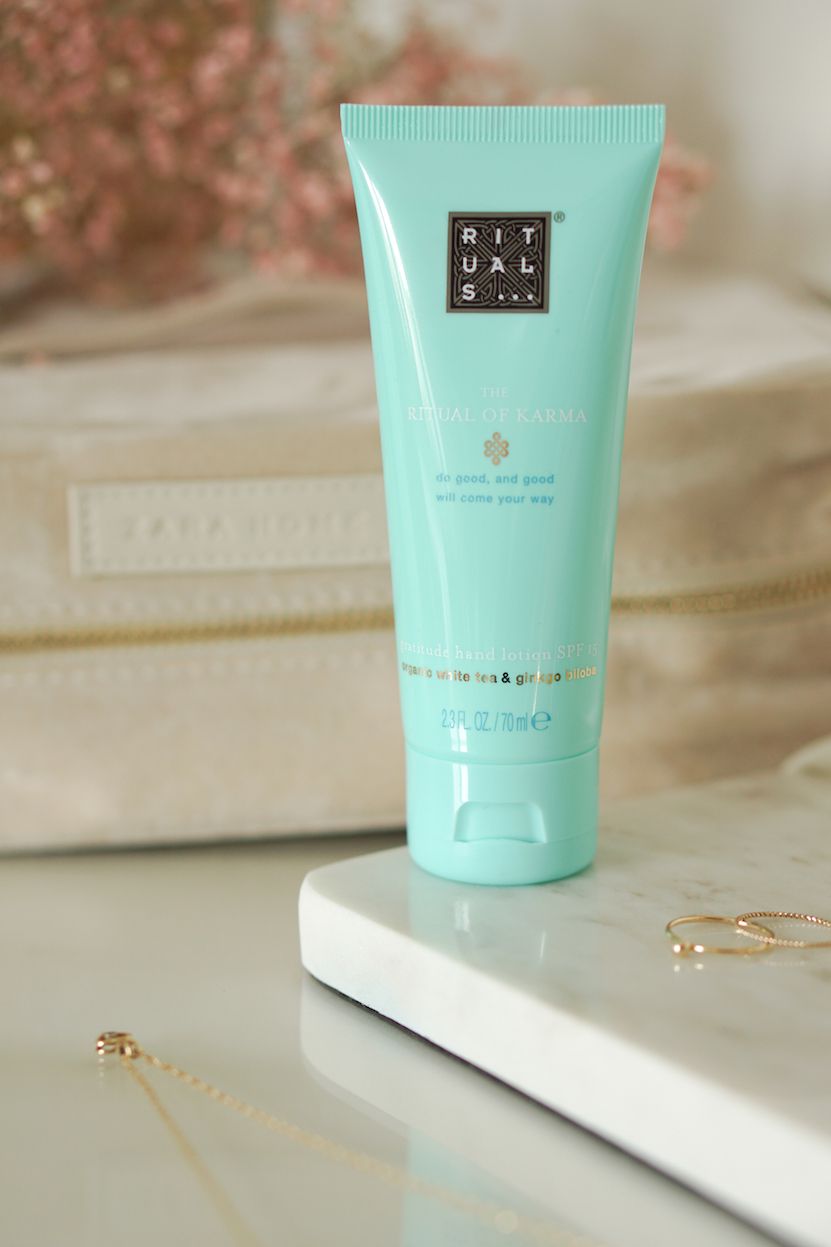
Self-tanning products don’t usually contain SPF, meaning they don’t offer protection from the sun. So, you’ll still need to remember to apply sunscreen every day.
Applying wash-off self-tanner is usually a breeze — just apply it as you would lotion, being careful to not stain clothing or bedding.
Applying DHA-containing self-tanners, on the other hand, can be a bit intimidating at first. Here’s how to do it:
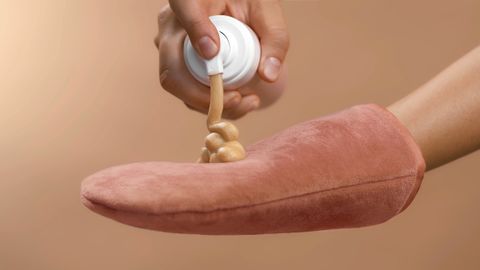
Let’s start with my favorite. This whipped mousse self-tanner contains DHA, but it’s also loaded with antioxidants (Indian gooseberry, acai berry, fig extract, goji berry, green and white tea). As noted earlier, this could help lessen free radical damage.
It also contains vitamins A, C, and E to help rebuild the skin’s barrier and soothe it. It uses plant-derived glycerin to moisturize as well.
I love this self-tanner for its natural ingredients, but it’s my favorite for its color, pleasant scent, fast-drying formula, and even wear. This is the first tanner I tried that didn’t leave me feeling sticky and actually gave a cooling effect after each time I swiped it over me.
Speaking of swiping it on, I also use the Skinerals Padded Microfiber Applicator Mitt, and it’s a game-changer. Usually, self-tan mitts slip and slide around as you use them and can easily stretch out after a couple of uses. Thanks to the band around the wrist, this mitt stays on perfectly. It also feels soft, and it washes nicely after use.
The formula comes in both dark and light shades. I find it to be natural looking and high quality at a reasonable price point.