

Winkelwagen
U heeft geen artikelen in uw winkelwagen
Without perioral dermatitis treatment, the condition may last for months or years. The following treatments can usually help to clear the rash. However, it may take some time for the treatment to work.
It is usually advised to stop using any cream, ointment, cosmetic, etc, on the face. It is particularly important to stop using any topical steroid - if one has been used then the rash will worsen for several days before it gets any better. There is nothing that can be done to help this. Whilst the rash is present, wash your face with warm water only. There is some evidence that toothpastes containing fluoride can make perioral dermatitis worse so these should be avoided too.
If using topical steroids on another part of the body or applying them to a child, it is important to wash hands thoroughly after using them to prevent perioral dermatitis.
Even when the rash has gone, it is better to try to avoid cosmetics or creams on the affected area as the rash can reappear. Using mild skincare products such as a fragrance free cleanser to wash the face, rather than soap, is also advised.
In mild perioral dermatitis, topical antibiotics (antibiotics in a cream applied to the skin), such as metronidazole or clindamycin, might be advised as part of the treatment plan.
Usually oral antibiotics, in the tetracycline group, are needed. The course of treatment is usually for six to twelve weeks and it may take several weeks to notice the benefit. Most cases do start to improve within two months of starting treatment so it is important to persevere.
The way antibiotics work in this condition is not clear. It is not a simple skin infection. However, tetracyclines and some other antibiotics have an action to reduce inflammation in addition to killing germs (bacteria) and this may be why they work.
Other perioral dermatitis treatment is sometimes used. This includes pimecrolimus cream. This cream works to reduce skin inflammation. It seems to be particularly effective in perioral dermatitis that has been caused by using topical steroids.
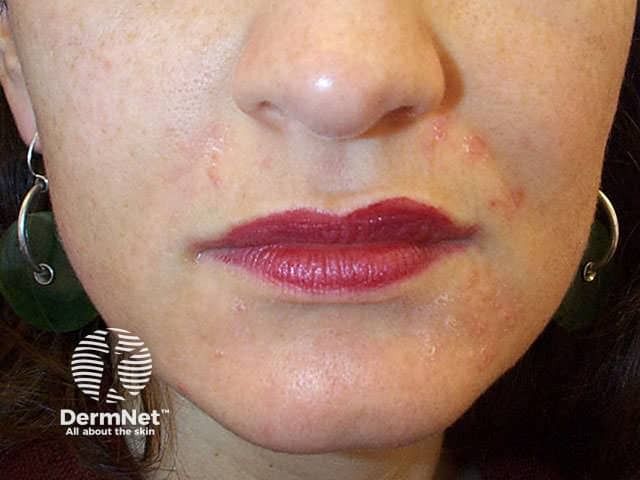
By Father Goose, CC BY-SA 4.0, via Wikimedia Commons
U sing a topical steroid (steroid creams, gels, ointments, etc) on the face can cause people to develop perioral dermatitis. Many cases develop soon after using a topical steroid on the face for another condition, such as mild eczema.
It is also possible to rub some steroid onto the face without realising it - for example, after using steroid creams on another part of the body and then rubbing or scratching the face before washing the hands.
Topical steroids can temporarily clear a mild patch of perioral dermatitis. Some people will have tried a steroid cream, which can be bought at pharmacies, to treat what they think is mild eczema. However, as soon as the rash clears and the steroid is stopped, the rash reappears, only even worse. This can become a vicious cycle where more steroid cream is used to try to clear the new rash, which may clear again and then recur so the cream is started again. The rash tends to get worse each time.

Seborroïsch eczeem komt voor bij mensen van alle leeftijden en etnische achtergronden. Doch de kans is groter dat het zich ontwikkelt tijdens bepaalde levensfasen, zoals in de kindertijd (2 tot 12 maanden oud), adolescentie, en volwassenheid, meestal na het dertigste levensjaar. Seborroïsch eczeem zie je bij baby’s vooral op (hoofd)huid met beharing. Deze vorm van eczeem is ook wel bekend als berg. Het kan bij baby’s ook op andere delen van het lichaam voorkomen.
De aandoening komt vooral veel voor bij volwassenen van 50 jaar en ouder, met een hoger risico voor zwarte mensen en mannen wereldwijd. Mensen met hiv, bepaalde neurologische aandoeningen (zoals de ziekte van Parkinson), psoriasis, of rosacea hebben ook een verhoogd risico op het ontwikkelen van seborroïsch eczeem. In sommige gevallen kan seborroïsch eczeem moeilijk te behandelen zijn, vooral bij mensen met aids. Als iemand zowel psoriasis als seborroïsch eczeem heeft, wordt dit ook wel sebopsoriasis genoemd. Sebopsoriasis is een huidaandoening die eruitziet als een mix tussen seborroïsch eczeem en psoriasis, met rode schilferige plekken.
Als je last hebt van de volgende gezondheidsproblemen, ben je vatbaarder voor seborroïsch eczeem:
Daarnaast loop je ook een groter risico op seborroïsch eczeem als je bepaalde psychotrope medicijnen gebruikt, zoals:
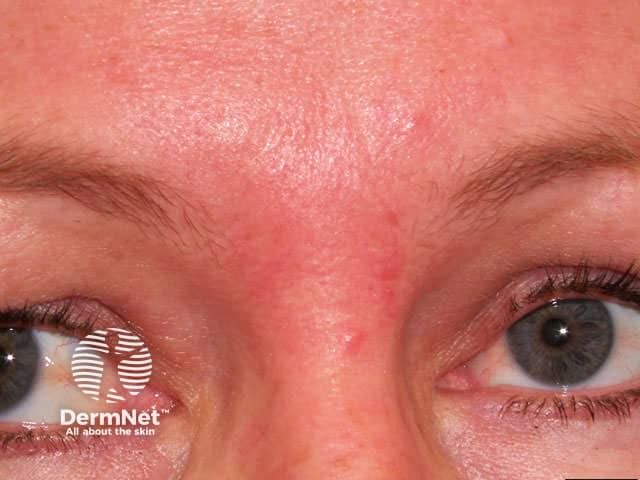
Wat zijn mogelijke differentiële diagnoses voor seborroïsch eczeem?
Als je last hebt van seborroïsch eczeem, kun je zelf ook enkele maatregelen nemen om de symptomen te verlichten. Houd de aangetaste huid zo schoon mogelijk, vermijd irriterende zeep of scheerschuim en gebruik in plaats daarvan een hydraterende zeepvervanger. Probeer stress te vermijden, omdat vermoeidheid en stress de symptomen kunnen verergeren. Ook is het belangrijk om niet te veel aan de huid te krabben, omdat dit schade kan veroorzaken en (secundaire) infecties kan bevorderen.
Er is geen genezing voor seborroïsch eczeem, maar behandeling kan helpen om je symptomen onder controle te houden. Het is mogelijk dat je langdurige behandleing moet toepassen om de symptomen te beheersen. Het kan ook zijn dat je slechts af en toe een behandeling nodig hebt om opvlammingen de kop in te drukken. Houd er rekening mee dat je symptomen waarschijnlijk terugkomen wanneer je stopt met de behandeling.
Je huisarts of dermatoloog kan een behandeling voor seborroïsch eczeem voorschrijven. Maar vaak kun je de middelen zonder recept kopen bij een apotheek of supermarkt.
Als je seborroïsch eczeem op de hoofdhuid hebt, zal je apotheker of huisarts waarschijnlijk aanbevelen dat je een van de volgende behandelingen probeert:
Als de seborroïsch eczeem steeds terugkomt, kan de huisarts aanraden om een antischimmelschampoo eenmaal per week of eens in de twee weken te blijven gebruiken. Ketoconazol bijvoorbeeld doodt schimmels en gisten.