


Winkelwagen
U heeft geen artikelen in uw winkelwagen
Avoid irritation and friction. Apply cool compresses (tap water, Burow’s solution). Drying agents such as aluminum chloride hexahydrate (e.g., Drysol) can be helpful because they may help minimize friction.
Treat secondary infection. Antibiotics used for pyogenic skin infections are most often used. Depending upon the presence of contraindications and other factors, cephalexin, amoxicillin-clavulanate, ciprofloxacin, erythromycin, doxycycline, and other agents may all be of value.
Optimize body weight
Topical 5-fluorouracil (5FU) is thought to affect calcium pump activity by releasing phosphoric acids. 5FU 5% cream applied three times weekly for 3 months followed by once weekly for 3 months has led to marked improvement.
Topical cyclosporine. Topical 1 alpha, 24-dihydroxyvitamin D3 (tocalcitol). Anecdotal reports suggest that calcipotriene 0.005% applied 3 or 4 times daily to affected areas may be of value.
Oral retinoids. A recent report demonstrated improvement with acitretin 25 mg orally. We will treat with a systemic retinoid for 2 or 3 months and then taper and discontinue therapy. Many affected individuals do very well with episodic treatment for flares in their disease.
Oral tacrolimus and injections of botulinum toxin type A has also been reported to be beneficial.
Laser ablation (especially with the carbon dioxide laser). Continuous carbon dioxide laser treatment is reported to have greater efficacy than dermabrasion. Four passes with the Ultra Pulse 5000 short pulse (300 mJ, 60 watts, 200 pulses/sec) has been shown to be beneficial. A recent series confirms that carbon dioxide laser treatment can provide safe and effective therapy for individuals with refractory disease.
Botulinum toxin type A (Dysport) injection
Split thickness skin graft
Excision of select lesions
Photodynamic therapy. Reports are mixed, with some reports noting efficacy and others not (20% aminolevulinic acid followed by exposure to an intense continuous wave). Polychromatic incoherent light (590-700 nm at 120 mW/cm 2 for 30 minutes) has been reported to be of help.
De ziekte van Hailey-Hailey is een genetische aandoening. Aangezien genetisch manipulatie (nog) niet mogelijk is is de ziekte niet te genezen. De behandeling is er op gericht er in ieder geval zo weinig mogelijk klachten van te hebben.
In de begin fase is vaak eenvoudige behandeling met een corticosteroidcreme afdoende. Indien de plekken ruiken is het verstandig er een antibioticum zalf bij te doen, eventueel nog gecombineerd met een antischimmelcreme.
Indien de klachten heel uitgebreid en pijnlijk zijn kan het nodig zijn een prednison stootkuur te geven, al dan niet in combinatie met antibiotica. Ook kan eventueel behandeld worden met ciclosporine.
Overmatige zeetproductie kan de klachten van Hailey Hailey verergeren en een goed antizweetbehandeling (eventueel met Botox) kan soms de klachten verminderen. Relatief nieuw is behandeling met CO2 laser. Het hele aangedane gebied wordt daarmee van haar opperhuid ontdaan, waarna een hele nieuwe opperhuid wordt gevormd. Kleine gebieden kunnen onder lokale verdoving worden gedaan. Indien grote gebieden aangedaan zijn wordt de behandeling onder algehele narcose gedaan. Na de behandeling is er een grote schaafwond die in enkele weken geneest. Het is wel een heel ingrijpende behandeling, maar er kunnen soms goede en langdurige resultaten mee worden bereikt.
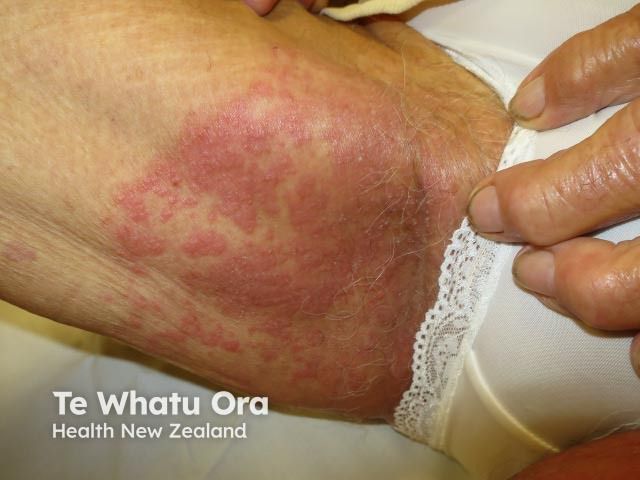
The exact mechanism of acantholysis in benign familial pemphigus (Hailey Hailey disease) is complex and remains uncertain. The identification of mutations in the ATP2C1 gene suggested a role of a Ca2+-dependent signaling pathway in regulating cell-to-cell adhesion and epidermal differentiation. Desmosomes, tight and adherens junctions are responsible for keratinocyte adhesion in the epidermis.
Cadherins, significant components of desmosomes and adherens junctions, are well-studied transmembrane glycoproteins that promote cell-cell adhesion in a Ca2+-dependent manner. In HHD keratinocytes, increased cytosolic Ca2+ could impair post-translational modifications (proteolytic processing, glycosylation, trafficking, or sorting) of cadherins and other structural proteins.[10]
Leinonen et al. identified a lower Ca2+ content in the basal epidermal layers of lesional skin of HHD patients compared to nonlesional and normal control skin.[12] The disturbed Ca2+ gradient was linked to abnormal tissue distribution and diminished functionality of ATP receptors. These alterations promoted a defect in the keratinocyte differentiation process.[12]
Furthermore, adherens junctions couple intercellular adhesion to the actin cytoskeleton. Impaired actin reorganization was identified in HHD and correlated with a marked decrease in cellular ATP, in vitro and in vivo, reflecting insufficient cellular ATP stores.[13] This defective ATP production could be related to a mitochondrial calcium overload.[14] A recent study analyzing proteomic changes in skin lesions of HHD revealed dysregulation of extracellular matrix and cell cytoskeleton components.[15]
Finally, two studies highlighted the role of complex multi-pathway alterations and oxidative stress in the pathogenesis of HHD.[16][17] Notch1 and p63 are part of a regulatory signaling controlling keratinocyte proliferation and differentiation. HHD-derived keratinocytes undergo oxidative stress and subsequently exhibit downregulation of both Notch1 and Itch expression and differential regulation of different p63 isoforms.[16]
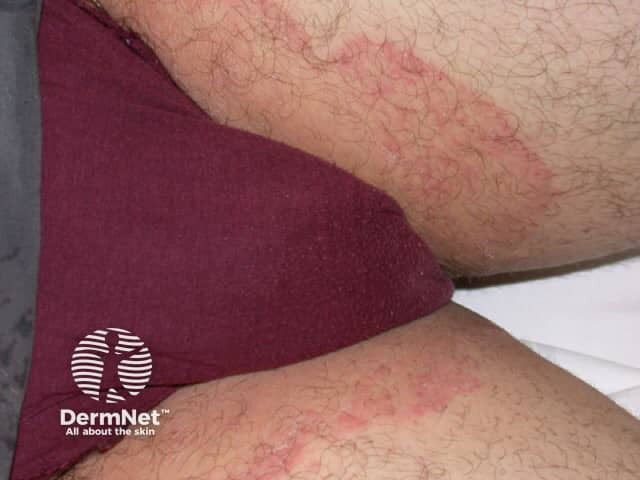
Another unusual clinical scenario is the development of concurrent herpes virus infection (eczema herpeticum). Patients with extensive skin involvement with Hailey-Hailey disease may develop a flare with associated vesicles and bullae. Clinicians should consider the possibility of eczema herpeticum in such cases and confirm the diagnosis with a Tzanck preparation, skin biopsy, or culture, and institute prompt antiviral therapy.
Another diagnostic difficulty is the rare occurrence of segmental Hailey-Hailey disease. Patients may have lesions that are limited in distribution. This unusual presentation may delay diagnosis.
Squamous cell carcinoma has been reported in a patient with Hailey-Hailey disease treated with tacrolimus. Any persistent, unusual, or refractory lesion should raise the suspicion of a concurrent problem. Associated squamous cell carcinoma as well as other entities such as extramammary Paget’s disease can mimic Hailey-Hailey disease. Biopsy should be considered in such cases.
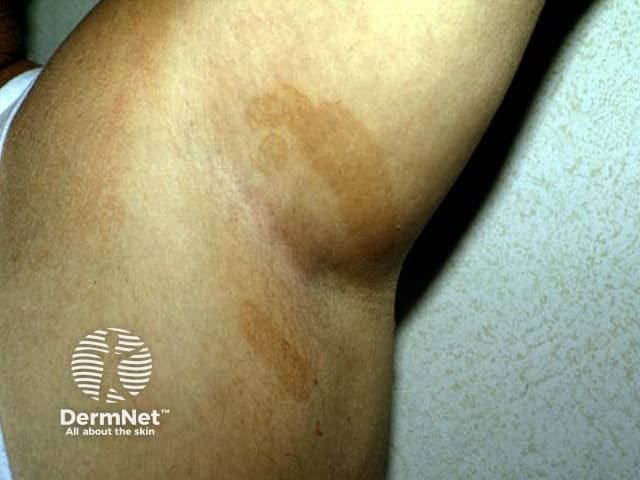
Maandelijks zetten we in de rubriek Openhartig een SenNet-lezer in de kijker: iemand met een bijzondere hobby, een hartverwarmende getuigenis, een opmerkelijk verhaal. Deze keer is het de beurt aan Carla, die aan de zeldzame huidziekte Hailey-Hailey lijdt. Elke dag is voor haar een pijnlijke opgave, waardoor genieten van de kleine dingen moeilijk wordt. Omdat weinigen de ziekte kennen, deelt ze hier een greep uit haar dagelijkse leven. Onder het motto ‘samen sterk’ is ze op zoek naar lotgenoten.
Met onze 5 kleinkinderen hebben we een fietstochtje gepland. Maar spijtig, oma kan weer niet mee! Een wandeltocht of fietstocht maken met mijn vroegere collega’s of vrienden. Maar sorry, ik kan morgen niet mee, hoor! Op dinsdagmiddag een uurtje tennis spelen. Spijtig, ik moet meestal een vervangster sturen! Naar een feestje bij vrienden of familie, of een dansnamiddag. Kan er misschien wel naartoe, maar dan enkel om naar de dansers te kijken alhoewel ik zelf graag ook had meegedanst! Een dagreis met SeniorenNet, een korte of langere reis gepland en betaald, maar . moet alweer annuleren! Een mooi kleedje lonkt in de etalage, maar het is niet van katoen. Dan zweet ik te veel en wordt alles snel erger. Mijn ma van 90 woont nog zelfstandig op 400 meter hier vandaan, maar ik kan er niet altijd naartoe om wat te helpen …Vreselijk, hé!
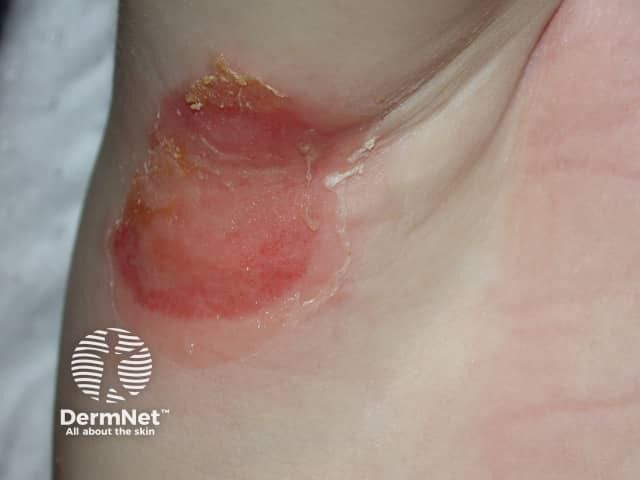
Na onze oproep hadden we 33 lotgenoten gevonden. Met 18 van hen zijn we op 8 april samengekomen in Eindhoven, waar we heel wat tips en hints hebben gehoord om ons leven wat dragelijker te kunnen maken. Voor velen was het een echte opluchting om eens vrij met lotgenoten te kunnen praten, want we begrepen elkaar heel goed! Hier vernamen we ook dat voor iemand een bepaalde medicatie helpt, maar bij iemand anders helemaal niet!
Ons motto is: ‘Samen zijn we sterk!’. Daarom willen we langs deze weg meer bekendheid geven aan de ziekte, zodanig dat men begrijpt hoe erg wij soms afzien en waarom we onze afspraken heel dikwijls niet kunnen naleven. Een tweede reden is om nog meer lotgenoten te kunnen vinden om hen uit hun isolement te halen, zodanig dat ze hun leed met anderen kunnen delen en zij inzien dat ze niet alleen met deze ziekte moeten leven.
Ken je iemand met deze ziekte, of ben je zelf een lotgenoot?
Heb jij ook een uitzonderlijke hobby, een merkwaardig talent of heb je onlangs (of niet zo onlangs) iets heel unieks meegemaakt? Dan horen wij graag jouw verhaal!
Dit is echt niet van de poes zo te lezen. had nog nooit van deze aandoening gehoord. Wens deze patienten veel moed :))) MVG Nicky
Heb daar ook veel last van in mijn liezen rond de nek op de borst en aan mijn anus heb veel gezocht met allerhande produkten en er zijn er 3 die helpen 1benzipeneceline flesje vocht erbij doen en deppen met watstaafjes helpt zeker 2 de beste oplossing medrol 32 mg 5 dagen kuur samen met fusiecort 2 a 3 maal daags insmeren en na 5 dagen weg haeleyvoor hoelang ? Soms 3 maanden soms langer en ook weinig suiker eten doet veel er aan ik hoop dat ik mensen die in de hel verkeren er uit kan krijgen ermee want het is niet gemakkelijk als ge een opstoot krijgt enorm veen pijn bijna niet te verdragen en blaasjes die openscheuren maar met deze kuur 1 week en ge zijt er tijdelijk vanaf grts Serge