

Winkelwagen
U heeft geen artikelen in uw winkelwagen
An arteriovenous malformation (AVM) is defined as a tangle of blood vessels, comprising direct connections between arteries and veins, without an interposed a capillary bed, and thus bypassing normal tissues. 1 AVMs can develop in any organ via angiogenesis, which is the physiological and biochemical process of de novo blood vessel formation out of existing blood vessels. This process is mediated by multiple factors, including vascular endothelial growth factor (VEGF), transforming growth factor β (TGF-ß), angio-poietin-1 and nitric oxide (NO) synthase. 2 It is currently believed that angiogenesis ceases after birth and can subsequently be reactivated only under certain physiological circumstances (e.g., chronic hypoxia), by certain hormones (e.g., oestrogen), or by angiogenic stimulators released by certain tumour cells. 3
While AVMs have been most often regarded as congenital malformations of the cerebral vasculature, there is an increasing body of literature demonstrating that AVMs are unlikely to be purely congenital in nature, with one theory proposing a “second-hit hypothesis”. 4–6 The second-hit or two-hit hypothesis suggests that an individual may have an underlying genetic or acquired propensity to develop AVMs, 6,7 whereby certain insults (such as alcohol-induced hepatic cirrhosis in this report) act to create an angiogenic environment allowing for AVM formation. Pathologies associated with the formation of de novo AVMs include, in decreasing order of frequency, other vascular malformations, haemorrhagic stroke, seizures, brain tumours, ischaemic stroke, Moya-moya disease, traumatic brain injury, genetic syndromes, inflammatory diseases and liver cirrhosis. 8 There have been two cases linking hepatic cirrhosis and AVMs, 4–6 and two cases of spontaneous AVM resolution post liver transplant. 9,10 A recent report has also described cerebral arterio-venous shunting as cause of stroke in a patient with advanced liver disease. 11
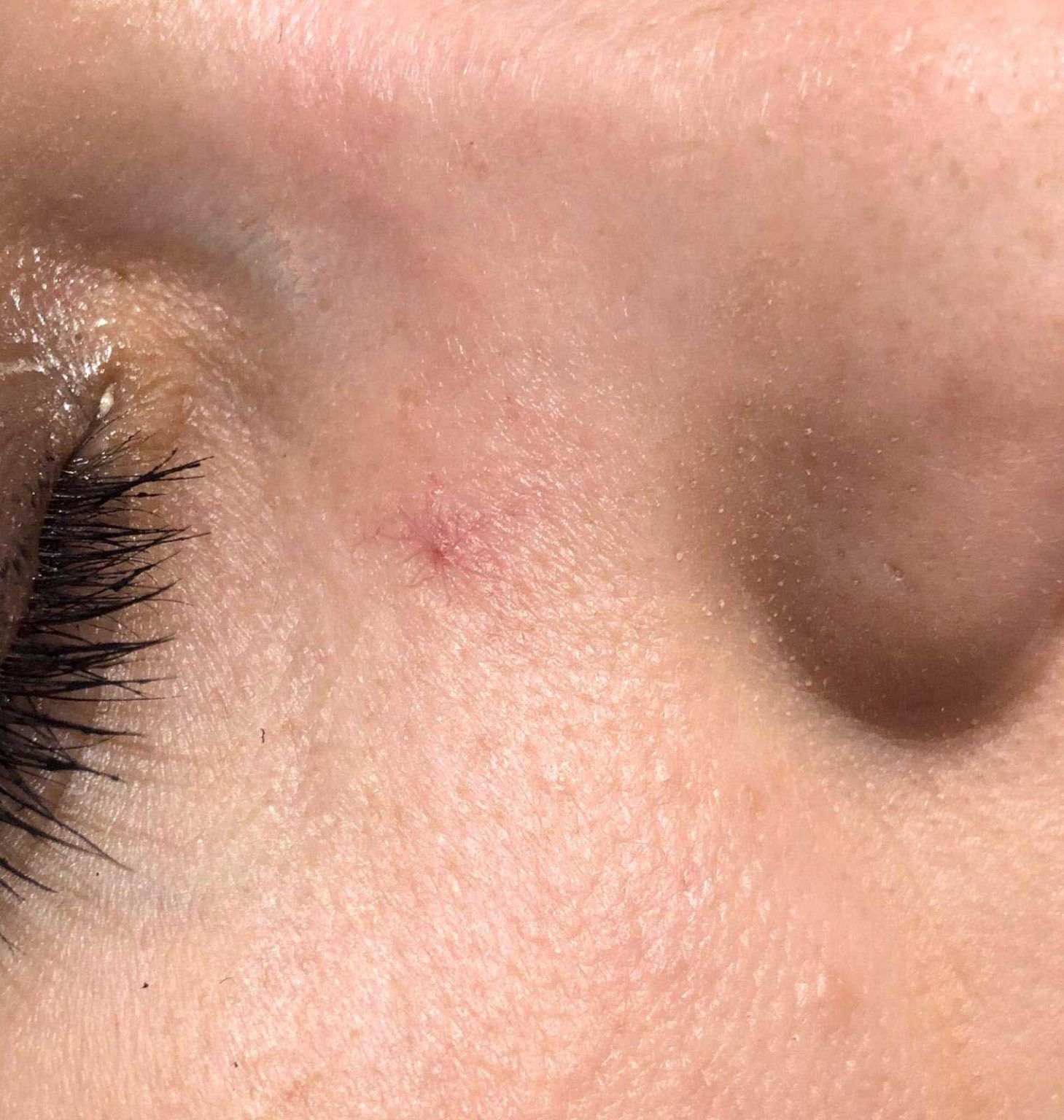
Eventueel kun je voor een spider naevus verwijderen laser behandeling in aanmerking komen voor een vergoeding vanuit je zorgverzekering. Dit is uiteraard afhankelijk van je zorgverzekeraar en de polis die je hebt. Laserbehandelingen bij ernstige huidaandoeningen in het gezicht komen hier vaak voor in aanmerking. Onze huidspecialisten adviseren je hier graag over.
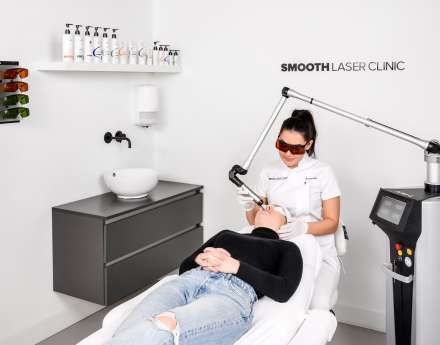
Uiteraard kijken we naar het effect van de eerste behandeling om te kijken hoeveel spider naevus laserbehandelingen je erna nog nodig hebt. De ene spinnenkop in het gezicht laat zich nu eenmaal makkelijker weglaseren dan de andere. Geen huid is hetzelfde, daarom passen wij onze behandelingen ook aan op jouw gezicht en huidtype. Je kunt bij Smooth Laser Clinic kiezen voor losse behandelingen of jouw Spider naevus verwijderen met een pakket behandelingen.
Moedervlekken (syn.: naevus naevocellularis, meervoud naevi) zijn goedaardige opeenhopingen van pigmentvormende cellen in de huid. Het is een normaal verschijnsel, vrijwel iedereen krijgt meerdere moedervlekken, gemiddeld zo’n 25.
De officiële medische term voor deze goedaardige moedervlek is naevus (naevocellularis). Naast normale, goedaardige moedervlekken bestaan er nog onrustige (dysplastische/atypische) moedervlekken en kwaadaardige moedervlekken (melanomen).
Onrustige moedervlekken zijn goedaardig, maar kunnen soms voorlopers van het melanoom zijn. Een melanoom kan ontstaan uit een onrustige moedervlek en een enkele keer zelfs uit een gewone moedervlek, al is de kans dat een moedervlek kwaadaardig wordt kleiner dan 1 op een miljoen. Ook kan een melanoom “spontaan” uit tevoren normale huid ontstaan.
This is an open access article distributed under the terms of the Creative Commons Attribution 4.0 International License, which permits unrestricted use, distribution and reproduction in any medium, provided the original author and source are credited.
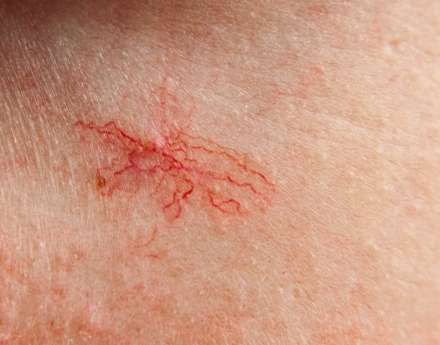
We report a patient with decompensated alcoholic liver cirrhosis (Child-Turcotte-Pugh class C) who developed a de novo left frontal cerebral AVM and a subcutaneous left temporal scalp spider naevus. Arteriovenous malformations (AVMs) are vascular abnormalities previously thought to be congenital in nature, although new research has revealed the potential for de novo AVM formation through a two-hit hypothesis. We propose that the oestrogen-rich environment seen in chronic liver disease could act as the second hit to allow for an angiogenic state favouring de novo AVM development. We also postulate that spider naevi are formed through a similar mechanism and may represent early-stage AVMs.